
In Formula 1, January usually looks the same: teams fine-tune the cars, drivers smile on sponsor shoots, and on social media it’s the gym, cardio, “working.” All of it set to the quiet ticking of the clock: at the end of January — testing in Barcelona, and after that the season can’t be stopped.
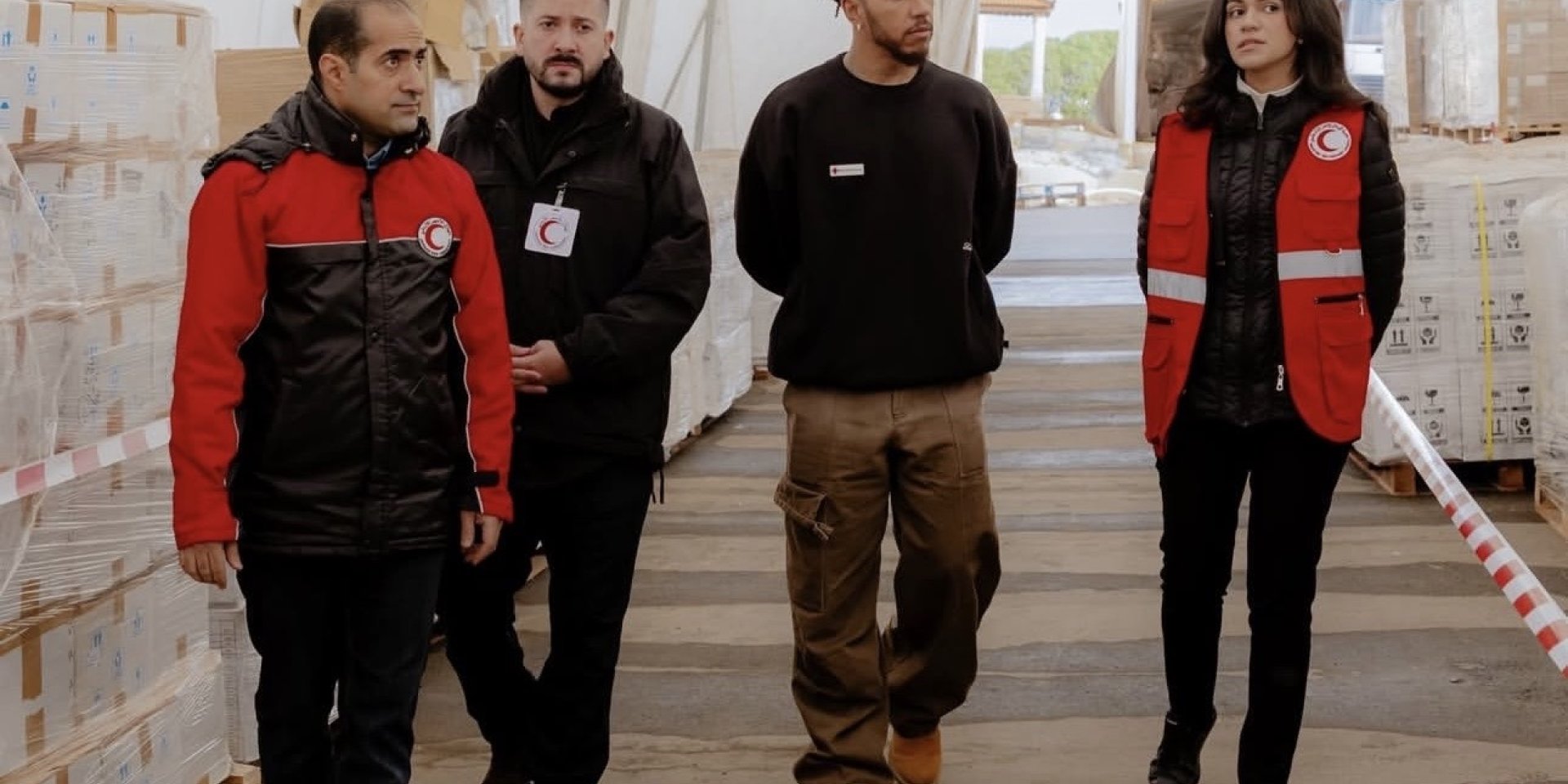
And against that backdrop, Lewis Hamilton does something that knocks the sport off its familiar script: on 19 January, he flies to Jordan to personally take part in preparing humanitarian shipments for Gaza. Not “showed up for a photo-op and shook a few hands.” Actual packing, hands-on work, logistics — the kind of work usually done by people without cameras and without the status of a “seven-time champion.”
Yes — right before everyone needs to be fully locked in.
Why it’s surprising right now
Because for Hamilton, this season isn’t “just another year on tour.”
New regulations, new cars, a new baseline.
And on top of that, a personal load: after a tough first year at Ferrari, he needs not just to “get in shape,” but to rebuild his inner footing.
In the off-season, Lewis often slips into silence — disappears from the noise, resets. But usually that looks like a retreat, training, minimal contact. Here, though, it’s Jordan and a humanitarian warehouse.
What exactly he did
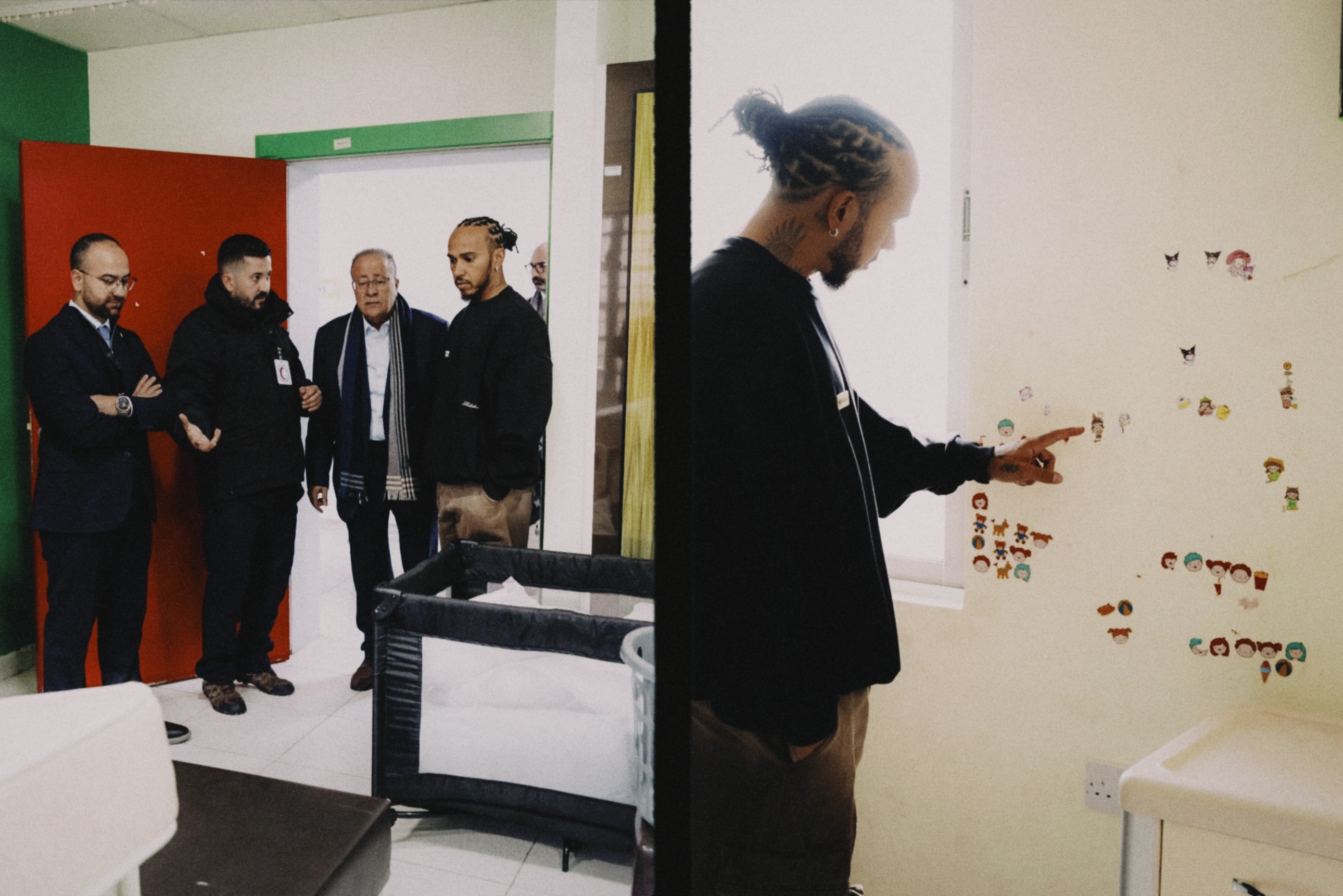
By his own account, he worked alongside teams from the British Red Cross, the Jordanian Red Crescent, and the Palestinian Red Crescent — helping assemble and prepare aid for dispatch.
And the most interesting part is his reaction: he went there expecting to see mostly hopelessness. When the scale of a disaster is huge, it’s easy to decide you can’t change anything.
But he came away with something else: people’s resilience, and that normal, stubborn human ability to “do your part” even when everything around you is bad. He singled out doctors, families, and humanitarian staff — the ones holding the situation together while the rest of the world argues in the comments.
Hamilton’s main message (and it’s very direct)
He isn’t saying “let’s all be kinder.” He’s more pragmatic — and harsher:
- there isn’t enough humanitarian aid;
- organizations need access to where help is actually needed;
- the public must not “get tired” and switch off — because audience fatigue is always paid for by the people at the bottom.
And importantly: this isn’t a sudden “impulse of the week.”
Hamilton has already spoken about the Israel–Palestine conflict: he talked about the need for a ceasefire, the return of hostages, and the fact that you can’t stay silent when children are dying. At the same time, he emphasized that he isn’t “rooting” for one side — he’s speaking about a humanitarian catastrophe and the responsibility of those who can influence decisions.
In the fall, he reported donations to charitable organizations (such as the Palestinian Red Crescent, MSF/Doctors Without Borders, and Save the Children) and urged others to do the same. And yes — he referenced high-profile international assessments of what’s happening, understanding the kind of reaction that would trigger. But the point stayed the same: helping people matters more than comfortable silence.
“But what about racing?” — a fair question
Because in F1, any extra story at the wrong time turns into a risk:
- you lose focus,
- you burn out,
- you get pulled into the news cycle,
- you show up to testing emotionally empty.
But with Hamilton, oddly enough, the logic may work the other way.
Some people are helped by quiet. Others are helped by a sense of meaning — stepping out of the “me/car/result” bubble. With Hamilton, that’s been noticeable for a long time: for years he’s built his public life as if it matters to him to be more than just a driver.
He has Mission 44 — a foundation that works with young people and social injustice. He’s invested his own money into it, built partnerships, carried projects beyond a single post. And judging by the way he talks about it, it’s not a “side thing,” but part of his identity.
So the trip to Jordan looks less like “he got distracted from preparation,” and more like “he’s doing what helps him not break under preparation.”